Eric Peters has been on an absolute tear lately, to the point where-- even setting cars aside-- he's the most interesting person I read online these days.
Here he reviews the latest Subaru Outback, and explains that if you so much as glance into your side mirrors, the car starts beeping at you to "keep your eyes on the road"! When I was taught how to drive in the 90s, I was told "always scan your mirrors", and to "never glue your eyes straight ahead permanently and lose track of everything happening spatially around you." So much for that, I guess. This car would quite
literally be undriveable for me-- I would need to return it to the dealership.
The most notable thing is that he's the
only car reviewer who points this stuff out! My GR86 is almost totally nag-free, but the GR Corolla has a few irritating things about it-- I read and listened to probably thirty reviews of the car, and not one of them brought up the annoyances. It just goes to show how car pundits, just like video game pundits, and
especially just like political pundits, are all in for the Beast System.
Meanwhile,
here he is correctly equating New York City's "Eric Adams's" idea to coerce illegal aliens into
people's homes with the character "Dr. Zhivago". A really sad thing came to me yesterday on this very topic: I brought this story up to a close friend of mine, and said "How would you like Mohammed Akbar from Syria bunking in your thirteen year-old daughter's room?" Then later in the day not two hours later, I found out from
another friend that in December a Muslim man from Egypt got into the house of his-- get this,
thirteen year-old niece-- and sexually assaulted her, brandishing a knife.
I hate being right-- I wish I were wrong about everything. Needless to say, her and her entire family will be in my prayers. Please pray for them all also.
Finally,
here is Eric Peters describing modern cars as "mobile panopticons", because the new models will have "AI" integrated in them, and will be listening to absolutely everything you say. I'm not even sure I trust the wife's GR Corolla: I was talking to her in the car the other day while driving, and the car kept thinking I was addressing
it-- so I knew it was listening. I had said something disparaging about the FBI, and said to her "Countdown until agents show up at our house after having eavesdropped through my own vehicle." These new "AI"-based cars are going to take things to the next level!
Woke Usurpation
Out of all the things I never thought the Woketards would take over, it would be institutions like "SETI". Yet
here we are! Better be careful to not say anything "offensive" around trans bacteria or anything. This wokeness, Cultural Marxist, Frankfurt School thing is a
disease-- it is a
mind virus, and the people who get infected by it become sick and nutty: it's like this thick pair of tinted glasses gets glued to their retinas, and they view every single moment of everything through the lens of "The Current Thing".
Every single time they open their mouths, every single sentence has something to do with: "oppressed" something-or-another; women; "climate change"; praise of extreme sexual sinning and deviancy; or idolatry of "brown people". It's impossible to even have a conversation with them-- they are so boring and so predictable and so narrow-focused, that it feels like
talking to some kind of primitive "AI" system. That's where the NPC meme comes from.
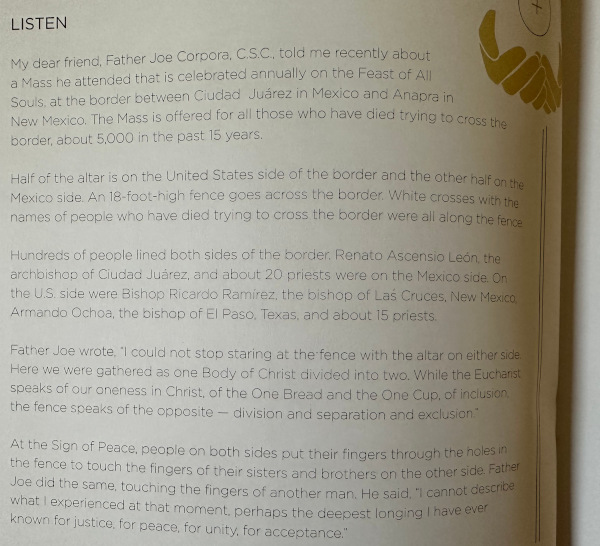
I am so sick of "The Message" that when I see something which is pushing it on me, I essentially chuck that thing right into the trash. Recently I was handed a "Synodal Letter" from my Diocesan Bishop, and even right in the Catholic Church there are people getting infected by the woke mind virus-- it's very disturbing. His whole letter is "bing, bing, bing", one stupid woke talking point after another. Here is an example:
It's hard to know where to even
begin with this. These people aren't even worshipping Christ at this point: they are worshipping Karl Marx, or Herbert Marcuse, or Klaus Schwab. Remember: Jesus threw the money changers out of the temple-- Jesus was
in favor of borders! He was
in favor of rules! He wasn't some kind of "anything goes" anarchist hippy.
God gave us the Ten Commandments through Moses: "Thou shalt not steal", "Thou shalt not kill", and so forth. What are those about?
Borders! Borders enforcing individual autonomy. Borders protecting property. There are lines which are there, and which shouldn't be crossed.
They hold hands through the fence and cry. Are they saying that nations of peoples shouldn't have the right to self-determination-- that they should be enslaved? And if not, then why are they crying? It'd be like me standing out in the yard holding hands with someone, saying "Oh my, I wish there weren't clouds, I feel such solidarity dreaming about a world without clouds!" Well, how would it
rain without clouds? We'd all die!
God gave us free will, i.e. freedom of association. He gave us this gift so we would have to choose to associate with
Him. But He also gave us the gift knowing it would allow us to freely associate-- or not!-- with
other people. While we should love our neighbor, we should also condemn their sins. I don't think it is God's will or Jesus's teachings that we shouldn't have boundaries to protect ourselves-- it's right in the Ten Commandments, as I mention above.
It feels weird having to point this out to a
bishop. Has he forgotten scripture?
But it's not just about borders. Take anthropogenic climate change: it's B.S. first of all, and second, the Catholic Church seems to be proposing a global government to deal with the "threat". Have they not read the Book of Revelation? Or how about this one: I heard a Catholic recently say, "I was at a Hispanic festival and felt a thrill go up my leg because I was surrounded by all brown people with brown hair."
Which religion do these things sound like: Christianity, or Cultural Marxism? You tell me, because I have my opinions about it.
And that leads me to my final observation: this woke mind virus disease is dangerous! The people infected by it can't think clearly, or use their brains! And like a blind man holding a lit torch tripping and fumbling around inside a wooden obstacle course, they are going to destroy nations, destroy religions, and ultimately destroy the world.
VAR
I've written many times about so-called "VAR" over the past several years, such as
here and
here. In the pre-VAR days, referees hardly ever made mistakes-- and when they did, the crowd would get mad, but the action would resume in seconds and everyone would move on. But with VAR, the whole game stops; the crowd has what feels like an
eternity to just stew, seeing the replay over and over; then the referee goes over, watches the screen,
still gets the decision wrong; then he's got sixty thousand people shouting at him, and the whole thing turns into a three ring circus.
Check
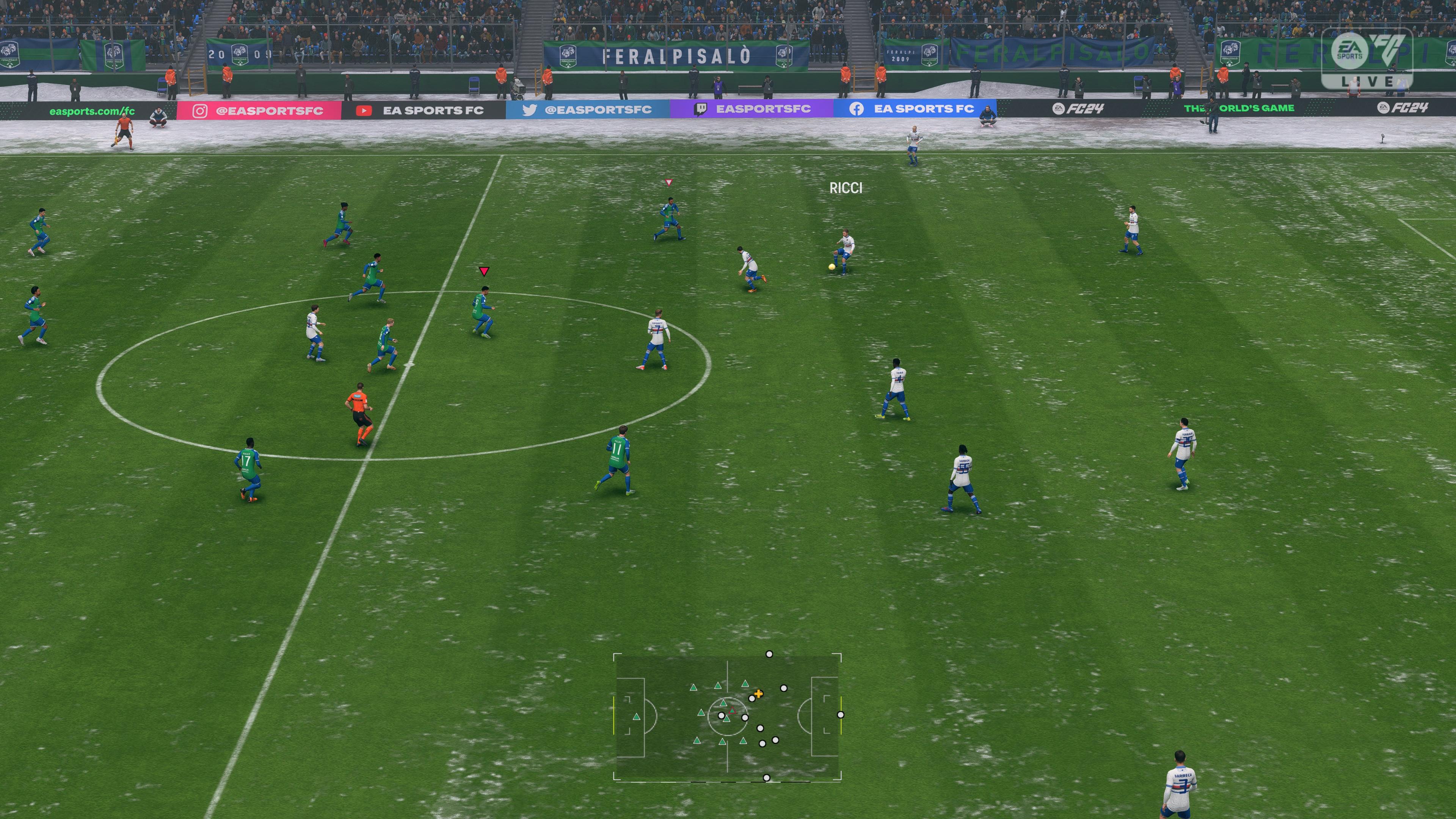
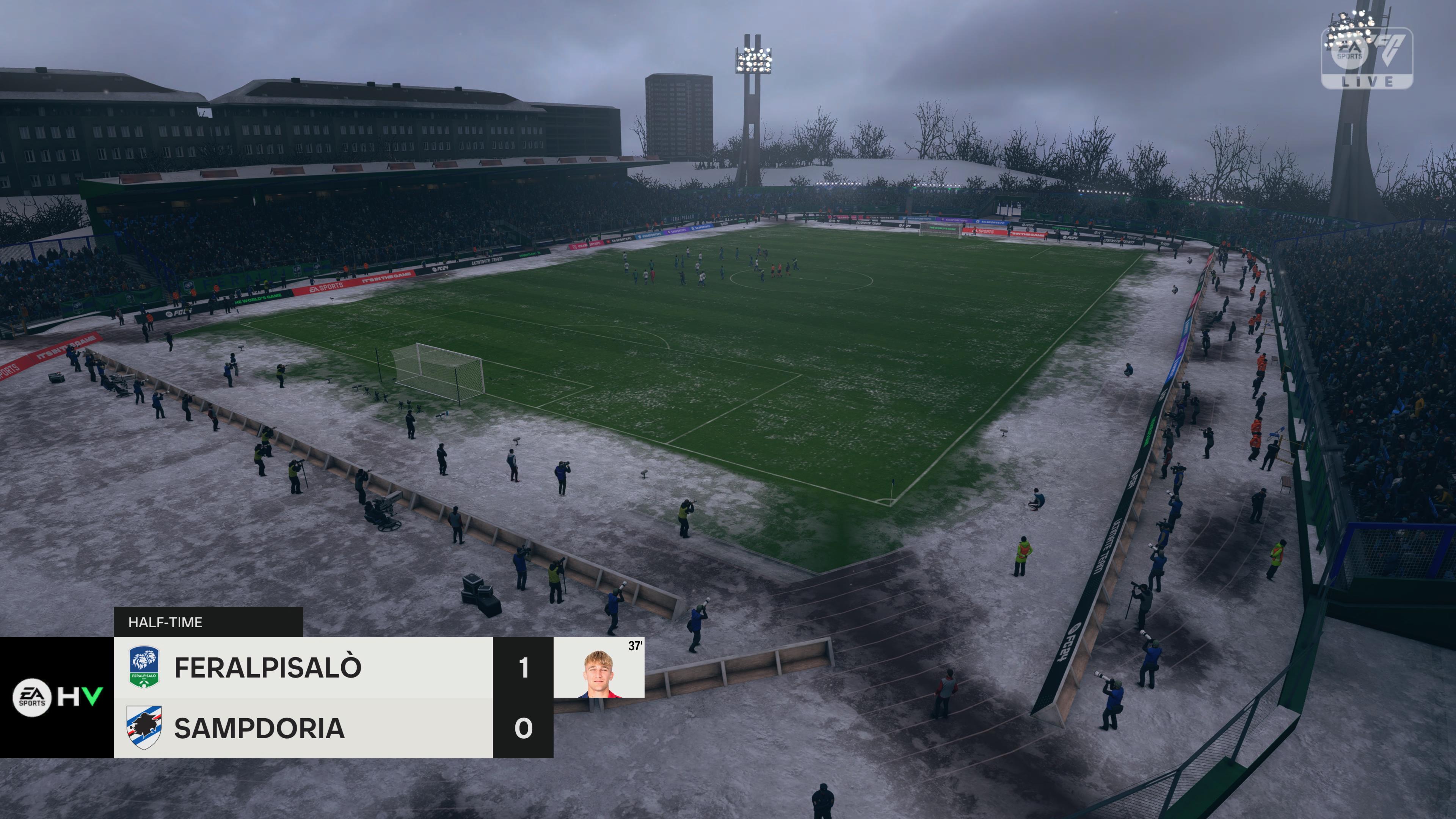
this out-- and this is just in one league! Major match-defining decisions are routinely being messed up,
with the game stoppages in place! Further, the referees are clearly being told, "If you see an obvious penalty or offside or violent foul, just let it go and VAR will clean it up", which makes the officials look like buffoons. And the reason? Then VAR
proponents can say, "Ahhh, good thing we have this system! Look, it caught that penalty which was missed!"
In the same way that all of the nanny assists in cars are making people worse drivers-- "I don't need to pay attention because the car will just ding at me"-- VAR is making referees worse: they aren't as focused because they have this perceived "safety net" beneath them. But
because they are less focused, they go over to the screen and
still monkey things up. If I were in charge, I'd axe VAR instantly, and just go back to the way refereeing used to be.
New doesn't mean
better. I recently had my priest friend say, "Oftentimes things are in place for a good reason; traditions are like the 'democracy of the dead'." Most of the time these days, new actively means
worse.
Balance
As I wrote
here, I was close to finally achieving some modicum of peace. Five freaking days being back in my career? All of that peace has evaporated, and all of the worst aspects of my character have resurfaced. My career brings out the absolute worst in me, and my next struggle is to figure out how to reconcile
it with who God wants me to be as a person.
The best case scenario would be for me to get laid off: I would get nine months of full severance pay, and I could spend hours praying for the calling on what to do with the next phase of my life. Maybe I would become a school computer teacher? Perhaps I would move to some other city or state and become a full-time Sacristan? Maybe I would become a Christian missionary, and move to another country? Or, maybe I would keep working from home and get a job at a place like Gab, where I could do God's work within software engineering?
I do pray every night, but I feel so constantly harried and stressed and busy, that it's tough to keep my heart open and receptive to what God is potentially saying to me. In any event, I will continue to post about this journey I am on, in the event that it helps others out there.